%20%20--%3E%0A%3Csvg%20version%3D%221.1%22%20xmlns%3D%22http%3A%2F%2Fwww.w3.org%2F2000%2Fsvg%22%20xmlns%3Axlink%3D%22http%3A%2F%2Fwww.w3.org%2F1999%2Fxlink%22%20x%3D%220px%22%20y%3D%220px%22%0A%09%20viewBox%3D%220%200%201004.4%20200%22%20style%3D%22enable-background%3Anew%200%200%201004.4%20200%3B%22%20xml%3Aspace%3D%22preserve%22%3E%0A%3Cstyle%20type%3D%22text%2Fcss%22%3E%0A%09.st0%7Bfill%3A%23231F20%3B%7D%0A%09.st1%7Bfill%3A%23005B9E%3B%7D%0A%09.st2%7Bfill%3A%23FFFFFF%3B%7D%0A%09.st3%7Bfill%3A%23989898%3B%7D%0A%09.st4%7Bfill%3A%23EE3B3F%3B%7D%0A%3C%2Fstyle%3E%0A%3Cg%20id%3D%22Template%22%3E%0A%3C%2Fg%3E%0A%3Cg%20id%3D%22Layer_2%22%3E%0A%09%3Cg%3E%0A%09%09%3Cpath%20class%3D%22st2%22%20d%3D%22M41%2C12.5H0v137.7h41c13.6%2C0%2C25.1-5.5%2C34.4-16.4c9.3-11%2C14.1-28.4%2C14.2-52.4c-0.1-24-4.9-41.5-14.2-52.4%0A%09%09%09C66.1%2C18%2C54.6%2C12.5%2C41%2C12.5z%20M61.5%2C115.3c-4.9%2C8.5-11.7%2C12.9-20.5%2C13.2H20.8V81.4V34.3H41c8.8%2C0.3%2C15.6%2C4.4%2C20.6%2C12.4%0A%09%09%09c5%2C8%2C7.5%2C19.6%2C7.5%2C34.6C68.9%2C95.5%2C66.4%2C106.8%2C61.5%2C115.3z%22%2F%3E%0A%09%09%3Cpath%20class%3D%22st2%22%20d%3D%22M146%2C47.3c-14.5%2C0.4-25.2%2C6.4-32.2%2C17.9c-5.1%2C8.8-7.7%2C20.4-7.8%2C34.7c0.1%2C13.8%2C2.7%2C25.1%2C7.8%2C33.9%0A%09%09%09c6.8%2C11.9%2C17.5%2C18.2%2C32.2%2C18.9c14.6-0.7%2C25.4-7%2C32.2-18.9c5.1-8.8%2C7.7-20.1%2C7.8-33.9c-0.1-14.4-2.7-26-7.8-34.7%0A%09%09%09C171.2%2C53.6%2C160.5%2C47.7%2C146%2C47.3z%20M162.5%2C119.2c-3.5%2C7.8-9.1%2C11.7-16.7%2C11.7c-6.9%2C0-12.4-3.9-16.3-11.7%0A%09%09%09c-2.4-5.5-3.5-11.9-3.5-19.1c0-7.7%2C1.2-14.3%2C3.5-19.7c3.4-7.8%2C8.8-11.7%2C16.3-11.7c7.7%2C0%2C13.3%2C3.9%2C16.7%2C11.7%0A%09%09%09c2.4%2C5.5%2C3.5%2C12.1%2C3.5%2C19.7C166%2C107.4%2C164.8%2C113.7%2C162.5%2C119.2z%22%2F%3E%0A%09%09%3Cpath%20class%3D%22st2%22%20d%3D%22M260.4%2C54.5c-4.2-4.7-10.2-7.1-18.1-7.2c-26.4%2C0.5-39.6%2C18.6-39.6%2C54.3c0%2C34.1%2C13.1%2C51.2%2C39.2%2C51.2%0A%09%09%09c6.8%2C0%2C13-2%2C18.4-6v3.5h20.8v-140l-20.8%2C10.9V54.5z%20M260%2C123.7c-4.8%2C6.6-10.9%2C9.8-18.2%2C9.7c-12.3-0.1-18.5-10.8-18.6-32.1%0A%09%09%09c0-21.1%2C6.4-32.1%2C19.2-32.9c8%2C0%2C13.9%2C3.4%2C17.7%2C10.1V123.7z%22%2F%3E%0A%09%09%3Cpath%20class%3D%22st2%22%20d%3D%22M359.5%2C54.5c-4.2-4.7-10.2-7.1-18.1-7.2c-26.4%2C0.5-39.6%2C18.6-39.6%2C54.3c0%2C34.1%2C13.1%2C51.2%2C39.2%2C51.2%0A%09%09%09c6.8%2C0%2C13-2%2C18.4-6c0.4%2C16.9-7.3%2C28.6-23%2C35.1l8.6%2C18.1c22.5-8.6%2C34.2-26.4%2C35.1-53.2V48.1h-20.8V54.5z%20M359.1%2C123.7%0A%09%09%09c-4.8%2C6.6-10.9%2C9.8-18.2%2C9.7c-12.3-0.1-18.5-10.8-18.6-32.1c0-21.1%2C6.4-32.1%2C19.2-32.9c8%2C0%2C13.9%2C3.4%2C17.7%2C10.1V123.7z%22%2F%3E%0A%09%09%3Cpath%20class%3D%22st2%22%20d%3D%22M465.9%2C61.7c-7-9.6-16.3-14.4-28-14.4c-12.4%2C0-22.1%2C5.2-29.1%2C15.5c-7%2C10.3-10.5%2C22.6-10.5%2C36.7%0A%09%09%09c0%2C17.1%2C3.6%2C30.3%2C10.9%2C39.5c7.3%2C9.2%2C16.8%2C13.8%2C28.7%2C13.8c16.9-0.4%2C28.6-8.3%2C35.1-23.6l-18.6-8c-3.9%2C7-9.6%2C10.3-16.9%2C10.1%0A%09%09%09c-5.2%2C0.1-9.5-1.9-12.8-6.1c-3.3-4.2-4.9-9.5-4.9-15.9h56.5C476.4%2C87.1%2C472.9%2C71.3%2C465.9%2C61.7z%20M419.5%2C89%0A%09%09%09c-0.3-5.2%2C1.3-10.1%2C4.7-14.7c3.4-4.6%2C8-6.8%2C13.7-6.7c5.4%2C0%2C9.6%2C2.1%2C12.9%2C6.4c3.2%2C4.2%2C4.7%2C9.2%2C4.6%2C15H419.5z%22%2F%3E%0A%09%09%3Cpath%20class%3D%22st2%22%20d%3D%22M515.9%2C55.5v-7.4h-21v102.2h21.2V87.6c0.5-12.6%2C5.2-19%2C13.9-19.3c4.1-0.1%2C8%2C1.8%2C12%2C6l6.9-19.9%0A%09%09%09c-5.1-4.5-11-6.8-17.7-7C524.5%2C47.3%2C519.4%2C50%2C515.9%2C55.5z%22%2F%3E%0A%09%09%3Cpath%20class%3D%22st2%22%20d%3D%22M598.1%2C86.3c-6.5-2.6-10.6-4.6-12.3-6c-1.6-1.4-2.4-3.2-2.3-5.3c0.1-2.5%2C1.1-4.4%2C3-5.9%0A%09%09%09c1.9-1.4%2C4.5-2.2%2C7.8-2.2c8%2C0.3%2C15.2%2C3.5%2C21.6%2C9.7l13.1-13.8c-9.3-10.3-21-15.6-35.1-15.8c-9.3%2C0-16.8%2C2.9-22.5%2C8.7%0A%09%09%09c-5.7%2C5.8-8.3%2C12.1-7.9%2C18.8c0%2C6.7%2C2.2%2C12.6%2C6.7%2C17.7c4.4%2C5.1%2C11.5%2C9.3%2C21.2%2C12.7c6.7%2C2.7%2C11.5%2C5.5%2C14.5%2C8.2%0A%09%09%09c3%2C2.7%2C4.4%2C5.7%2C4.3%2C8.8c0.1%2C3.2-1.4%2C5.8-4.6%2C7.9c-3.2%2C2.1-7.1%2C3.1-11.7%2C3c-6.4-0.1-13.6-3.5-21.6-10.1l-13.7%2C14.4%0A%09%09%09c10.7%2C10.1%2C22.5%2C15.3%2C35.3%2C15.4c11.3-0.1%2C20.1-2.9%2C26.5-8.3c6.4-5.4%2C9.7-12.5%2C9.8-21.3c0-10-3-17.9-9.1-23.6%0A%09%09%09C615%2C93.7%2C607.4%2C89.3%2C598.1%2C86.3z%22%2F%3E%0A%09%09%3Cpolygon%20class%3D%22st2%22%20points%3D%22775.5%2C85.1%20758.4%2C12.5%20738.2%2C12.5%20721.5%2C85.1%20711.3%2C12.5%20690.1%2C12.5%20709.5%2C150.3%20728%2C150.3%20%0A%09%09%09748.2%2C61.9%20769%2C150.3%20787.4%2C150.3%20806.9%2C12.5%20785.7%2C12.5%20%09%09%22%2F%3E%0A%09%09%3Cpath%20class%3D%22st2%22%20d%3D%22M883.5%2C56.4c-7-6.1-15.6-9.1-25.8-9.1c-12.4%2C0.4-23.4%2C4.1-32.8%2C11.1L835.3%2C75c6.8-5.2%2C14.5-7.7%2C23-7.4%0A%09%09%09c9.9%2C1%2C14.8%2C6.4%2C14.5%2C16.4c-5.2-1.5-10.9-2.3-16.9-2.3c-10.9-0.1-19.5%2C3.2-25.8%2C10c-6.3%2C6.8-9.5%2C15.2-9.5%2C25.2%0A%09%09%09c0%2C11.6%2C3.4%2C20.5%2C10.3%2C26.6c6.9%2C6.1%2C15.5%2C9.2%2C26%2C9.4c6.3-0.1%2C12-2.1%2C17.1-6v3.3h20.2V83C894%2C71.4%2C890.5%2C62.5%2C883.5%2C56.4z%0A%09%09%09%20M872.2%2C127c-5%2C5.1-10.3%2C7.6-15.9%2C7.6c-5.2%2C0-9.4-1.8-12.5-5.5c-3.1-3.7-4.6-7.6-4.6-11.7c-0.1-4%2C1.3-7.5%2C4.3-10.7%0A%09%09%09c3-3.2%2C6.8-4.7%2C11.4-4.7c5.8%2C0%2C11.5%2C0.8%2C17.3%2C2.5V127z%22%2F%3E%0A%09%09%3Cpolygon%20class%3D%22st2%22%20points%3D%22980.9%2C49.7%20955.6%2C120.2%20929.3%2C49.7%20906.7%2C49.7%20943.6%2C150.3%20924.4%2C199.8%20947.5%2C199.8%201004.4%2C49.7%20%09%09%0A%09%09%09%22%2F%3E%0A%09%3C%2Fg%3E%0A%3C%2Fg%3E%0A%3C%2Fsvg%3E%0A)

There have been rumblings that the trade market will be of the most appeal to the Los Angeles Dodgers this offseason. To an extent, that makes sense. The free-agent market is considered thin outside of the top few names, and there will surely be more than one egregious overpay.
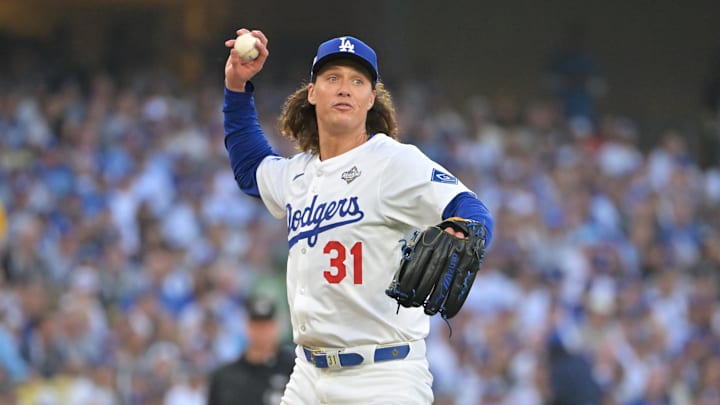
The Dodgers aren't without holes. Left field is an issue. So is the bullpen. However, they're also stocked with assets that can be dangled on the trade market. While that usually means the farm system, there's a chance they could also deal from the big league roster, with one anonymous MLB executive naming Tyler Glasnow as a potential sleeper trade candidate.
Glasnow could be flipped to fill other roster holes, either directly or indirectly, and the idea might not be as crazy as it sounds. In fact, there are a few reasons why it makes sense.
Tyler Glasnow is an under-the-radar Dodgers' trade candidate, and dealing him could make sense for a few reasons
On the surface, giving up a starter, especially one as dominant as Glasnow, might not make a lot of sense when the team is considering running a six-man rotation. However, this is where Los Angeles's embarrassment of riches comes into play.
The Dodgers have Blake Snell, Yoshinobu Yamamoto, and Roki Sasaki already penciled in for three spots. Emmet Sheehan has proven that he deserves regular outings as well, and you know that Shohei Ohtani will get his turns through the rotation (though, of course, they'll be managed). That's already five arms.
For the sixth, you have former top prospects River Ryan and Gavin Stone both coming back from injury. Neither of whom have gotten much runway to show what they can do, but the potential is still there despite the maladies both have suffered. For depth, you still have Justin Wrobleski and Landon Knack. Ben Casparius could also get some turns as a spot starter. Point being, you have enough without Glasnow in the fold.
Secondly, after a dominant postseason showing that saw him post a 1.69 ERA pitching both as a starter and out of the 'pen, Glasnow's value has never been higher. We all know what he can do when healthy, but that's always the biggest question.
Glasnow's never thrown more than 134 innings in a single season — a mark he reached in 2024. In fact, he's only crossed the 100-inning threshold three times in his 10 years in the bigs. That makes it tough to rely on him, but also limits his value. Capitalizing now while the vibes are good avoids all of that washing away when the next injury occurs.
Lastly, the contract isn't as prohibitive as it once was. The 32-year-old righty will make $32.5 million each of the next two seasons, but that's the extent of the commitment. A team that potentially acquires him also would hold a $30 million club option for 2028, which might be enticing if he proves to stay healthy.
Compared to the six-plus years it will take to land most top-tier free agent starters, Glasnow might actually present less risk.
The flip side is that a rival team would need the financial wherewithal to take on his hefty salary, but as a shorter-term commitment some teams on the bubble might be swayed to roll the dice.
A Glasnow deal could be a big leaguer-for-big leaguer-type swap, or he could be dealt for prospects that would allow the Dodgers to make a follow-up trade that doesn't deplete the farm system.
All of this isn't to say it's likely, but there's some logic here, and it could be an out-of-the-box way to take a strength and use it to fill a weakness, while capitalizing on an asset's value before it drops.
 Add us as a preferred source on Google